Source 90 Degree Reversible Air Drill for Industrial Use
Find and compare 30 listings for the 90 degree reversible air drill, featuring models like SAT3702 and AD9518113-2-C. Evaluate specifications such as free speed, air consumption, and chuck size to select the right pneumatic tool for building and industrial applications.
Key considerations
Products List




Comprehensive Sourcing Guide
90 Degree Reversible Air Drill Sourcing Guide
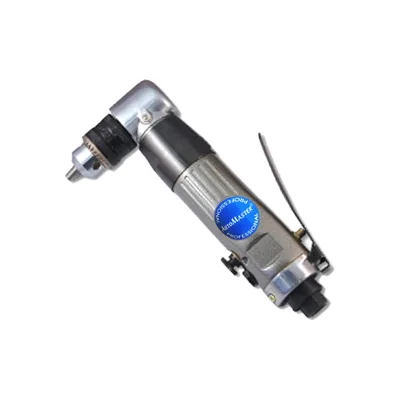
The 90 degree reversible air drill is a specialized pneumatic tool designed for accessing confined spaces where standard straight drills cannot reach, making it essential for automotive assembly, heavy machinery maintenance, and industrial construction tasks. Buyers must prioritize models that offer a true 90-degree angle with a reversible rotation function to handle both tightening and loosening operations efficiently in tight corners. The observed market data indicates a range of configurations, from compact hand drills to heavy-duty rock drilling variants, each serving distinct operational needs within building and industrial sectors.
Procurement decisions should focus on matching the tool's physical dimensions and air consumption to the specific workspace constraints and available compressed air supply. Listings reveal significant variations in length, ranging from approximately 170mm to 212mm, and air consumption figures that differ between 4cfm and 7cfm depending on the model and speed settings. Sourcing agents must verify that the selected unit's weight and balance align with operator comfort requirements, as prolonged use of heavier units, such as those weighing over 1.4kg, can lead to fatigue and reduced productivity in demanding environments.
Product Scope and Observed Listing Signals
The current market for 90 degree reversible air drills presents a diverse array of product types, including rotary air drills, impact drills, and general hand drills, each tailored to specific material processing requirements. Buyers should note that while some units are explicitly marketed for rock drilling applications, others are optimized for general building and industrial use, necessitating a clear definition of the intended workload before selection. The presence of both customized and non-customized options suggests that suppliers offer flexibility in branding and packaging, allowing buyers to align the tool with their corporate identity or specific project requirements.
Listing signals indicate a wide spectrum of operational speeds, with free speeds observed ranging from 700rpm to 1800rpm, which directly influences the tool's suitability for different fastening or drilling tasks. The chuck sizes vary between 1/2 inch and 3/8 inch, requiring buyers to ensure compatibility with their existing bit inventory and the specific fasteners used in their assembly lines. Additionally, the startup mode is frequently described as hand press, a critical detail for operators who need immediate control over the tool's engagement to prevent accidental activation in sensitive work zones.
Technical Specifications to Verify
Technical verification must begin with the air inlet and pressure requirements, as mismatches here can lead to inefficient operation or equipment damage. The observed data points to a standard air inlet size of 1/4 inch and an operating pressure around 6.3kg/cm², but buyers must confirm these figures against their facility's compressed air system capabilities. It is crucial to validate the average air consumption, which varies from 4cfm to 7cfm, to ensure that the plant's air compressor can sustain the demand without causing pressure drops that would degrade tool performance during continuous operation.
Dimensional and weight specifications are equally critical for ergonomic assessment and spatial planning within the work area. Buyers should scrutinize the overall length, which ranges from 170mm to 212mm, and the net weight, observed between 1.1kg and 1.47kg, to determine if the tool meets the physical constraints of the job site. Furthermore, the classification of the tool as either a rotary or impact drill dictates its mechanical behavior; verifying the specific working style ensures the selected unit can deliver the necessary torque and impact force for the targeted material, whether it be soft metal or hard rock.
Compliance and Safety Documentation
Safety compliance for pneumatic tools relies heavily on the manufacturer's adherence to international standards and the provision of clear operational documentation. While specific certification marks like REACH were noted in background data, buyers must request explicit proof of compliance with relevant safety standards for the region of operation, ensuring the tool meets local regulations for industrial equipment. The absence of a specific certification claim in the primary product facts necessitates a proactive request for test reports or conformity certificates to mitigate liability risks associated with workplace accidents.
Documentation regarding the tool's warranty and support structure is a vital component of the safety and reliability assessment. The observed warranty period of one year for certain brands indicates a baseline expectation for product durability, but buyers should clarify the scope of this coverage, including whether it covers pneumatic components and mechanical wear. Ensuring that the supplier provides detailed user manuals with safety warnings, maintenance schedules, and emergency shutdown procedures is essential for maintaining a safe working environment and extending the operational life of the equipment.
Cost Drivers and Commercial Terms
The pricing structure for 90 degree reversible air drills is influenced by a complex interplay of factors, including the degree of customization, brand reputation, and the specific technical capabilities of the unit. The observed price range is exceptionally broad, spanning from $0.50 to $67,000, which reflects the difference between basic hand tools and highly specialized, heavy-duty industrial systems. Buyers must carefully evaluate the value proposition of higher-priced models, ensuring that the additional cost correlates with tangible benefits such as enhanced durability, superior air efficiency, or advanced customization features.
Commercial terms, particularly regarding Minimum Order Quantity (MOQ) and packaging, significantly impact the total cost of ownership and logistics planning. The market data shows an MOQ range from 1 to 300 units, offering flexibility for small workshops while potentially requiring bulk commitments for large-scale industrial deployments. Packaging options vary from standard boxes to customer-specific packing, and buyers should negotiate these terms to minimize shipping costs and ensure the tools arrive in optimal condition, especially when ordering large quantities that require specialized handling or branding.
Supplier Qualification and Quality Control
Supplier qualification for pneumatic tools requires a rigorous assessment of their manufacturing capabilities and their ability to deliver consistent product quality. The presence of OEM/ODM support suggests that many suppliers have the capacity to tailor products to specific buyer requirements, but this capability must be verified through audits of their production lines and quality control processes. Buyers should prioritize suppliers who demonstrate a clear track record in producing air drills with precise specifications, such as accurate chuck sizes and consistent free speeds, to avoid receiving units that deviate from the agreed technical parameters.
Quality control protocols must extend beyond the final inspection to include checks on critical components like the chuck, air inlet, and internal rotary mechanisms. Given the variation in observed specifications, such as different lengths and weights for similar models, buyers should implement a sampling plan to verify that the delivered units match the provided technical data sheets. Establishing a clear communication channel for reporting defects and ensuring that the supplier has a robust process for handling non-conforming products is essential for maintaining the reliability of the supply chain and preventing operational disruptions.
Long-Term Procurement Checks
Long-term procurement success depends on establishing a framework for continuous performance monitoring and supplier relationship management. Buyers should implement a system to track the mean time between failures for the air drills, using this data to identify potential quality issues early and to negotiate better terms with suppliers who demonstrate superior reliability. Regular reviews of the tool's performance against the initial specifications, such as air consumption and speed consistency, will help ensure that the equipment continues to meet operational needs as the business scales or changes its production processes.
Sustainability and lifecycle management are increasingly important factors in the procurement of industrial tools, requiring buyers to consider the availability of spare parts and the ease of maintenance. The observed data indicates that some units come with specific packing and standard specifications, but buyers must verify the long-term availability of replacement parts like chucks and seals to minimize downtime. Developing a strategic partnership with suppliers who offer comprehensive after-sales support and warranty services ensures that the 90 degree reversible air drills remain a reliable asset throughout their intended service life.
FAQs
What is the free speed of the Clounds air drill?
The Clounds air drill operates at a free speed of 700 rpm. This model features a 1/2 inch chuck and an air inlet of 1/4 inch. It consumes approximately 7 cubic feet of air per minute while running at 6.3 kilograms per square centimeter pressure.
Can I customize the 90 degree reversible air drill?
Customization is available for this specific air drill model. The product supports OEM and ODM services to meet unique requirements. Buyers can request specific modifications while maintaining the standard rotary working style and pneumatic power classification for industrial applications.
What are the dimensions and weight of the SAT3702 model?
The SAT3702 model has a length of 212 millimeters or 8.35 inches. Its net weight is 1.4 kilograms. This unit is packaged in a box or plastic box and is designed for rock drilling applications with a 90-degree angle configuration.
Which air drill model offers 1800 rpm free speed?
The SAT3725 model provides a free speed of 1800 rpm. It features a 3/8 inch chuck and consumes 5 cubic feet of air per minute. The unit weighs 1.1 kilograms and has a compact length of 170 millimeters for easier handling.
What is the warranty period for AUTOMASTER pneumatic drills?
AUTOMASTER pneumatic drills come with a one-year warranty. This coverage applies to the hand drill classification used in building and industrial settings. The product originates from China and supports customized packing options to suit specific buyer logistics needs.
How much air does the SAT3726 model consume?
The SAT3726 model consumes an average of 4 cubic feet of air per minute. It operates at 6.3 kilograms per square centimeter pressure. This hand drill is classified for impact drilling and features a 3/8 inch standard chuck size for versatile use.
What is the startup mode for the screwdriver function?
The screwdriver startup mode requires a hand press action to initiate operation. This feature is integrated into the rotary type pneumatic drill design. The tool is powered by air and is suitable for various industrial applications requiring precise control during startup.